Life After Death
by St. John Maximovitch
A description of the first 40 days after death.
Limitless and without consolation would have been our sorrow for close ones who are dying, if the Lord had not given us eternal life. Our life would be pointless if it ended with death. What benefit would there then be from virtue and good deed? Then they would be correct who say: "Let us eat and drink, for tomorrow we die!"
But man was created for immortality, and by His resurrection Christ opened the gates of the Heavenly Kingdom, of eternal blessedness for those who have believed in Him and have lived righteously. Our earthly life is a preparation for the future life, and this preparation ends with our death. "It is appointed unto man once to die, but after this the judgment" (Heb 9:27). Then a man leaves all his earthly cares; the body disintegrates, in order to rise anew at the General Resurrection. Often this spiritual vision begins in the dying even before death, and while still seeing those around them and even speaking with them, they see what others do not see. [1]
But when it leaves the body, the soul finds itself among other spirits, good and bad. Usually it inclines toward those which are more akin to it in spirit, and if while in the body it was under the influence of certain ones, it will remain in dependence upon them when it leaves the body, however unpleasant they may turn out to be upon encountering them. [2]
For the course of two days the soul enjoys relative freedom and can visit places on earth which were dear to it, but on the third day it moves into other spheres. [3] At this time (the third day), it passes through legions of evil spirits which obstruct its path and accuse it of various sins, to which they themselves had tempted it.
According to various revelations there are twenty such obstacles, the so-called "toll-houses," at each of which one or another form of sin is tested; after passing through one the soul comes upon the next one, and only after successfully passing through all of them can the soul continue its path without being immediately cast into gehenna. How terrible these demons and their toll-houses are may be seen in the fact that Mother of God Herself, when informed by the Archangel Gabriel of Her approaching death, answering her prayer, the Lord Jesus Christ Himself appeared from heaven to receive the soul of His Most Pure Mother and conduct it to heaven. Terrible indeed is the third day for the soul of the departed, and for this reason it especially needs prayers then for itself. [4]
Then, having successfully passed through the toll-houses and bowed down before God, the soul for the course of 37 more days visits the heavenly habitations and the abysses of hell, not knowing yet where it will remain, and only on the fortieth day is its place appointed until the resurrection of the dead. [5] Some souls find themselves (after the forty days) in a condition of foretasting eternal joy and blessedness, and others in fear of the eternal torments which will come in full after the Last Judgment. Until then changes are possible in the condition of souls, especially through offering for them the Bloodless Sacrifice (commemoration at the Liturgy), and likewise by other prayers. [6]
How important commemoration at the Liturgy is may be seen in the following occurrence: Before the uncovering of the relics of St. Theodosius of Chernigov [7], the priest-monk (the renowned Starets Alexis of Goloseyevsky Hermitage, of the Kiev-Caves Lavra, who died in 1916) who was conducting the re-vesting of the relics, becoming weary while sitting by the relics, dozed off and saw before him the Saint, who told him: "I thank you for laboring with me. I beg you also, when you will serve the Liturgy, to commemorate my parents" -- and he gave their names (Priest Nikita and Maria). "How can you, O Saint, ask my prayers, when you yourself stand at the heavenly Throne and grant to people God's mercy?" the priest-monk asked. "Yes, that is true," replied St. Theodosius, "but the offering at the Liturgy is more powerful than my prayer."
Therefore, panikhidas (i.e., Trisagion Prayers for the Dead) and prayer at home for the dead are beneficial to them, as are good deeds done in their memory, such as alms or contributions to the church. But especially beneficial for them is commemoration at the Divine Liturgy. There have been many appearances of the dead and other occurrences which confirm how beneficial is the commemoration of the dead. Many who died in repentance, but who were unable to manifest this while they were alive, have been freed from tortures and have obtained repose. In the Church prayers are ever offered for the repose of the dead, and on the day of the Descent of the Holy Spirit, in the kneeling prayers at vespers, there is even a special petition "for those in hell."
Every one of us who desires to manifest his love for the dead and give them real help, can do this best of all through prayer for them, and particularly by commemorating them at the Liturgy, when the particles which are cut out for the living and the dead are let fall into the Blood of the Lord with the words: "Wash away, O Lord, the sins of those here commemorated by Thy Precious Blood and by the prayers of Thy saints."
We can do nothing better or greater for the dead than to pray for them, offering commemoration for them at the Liturgy. Of this they are always in need, and especially during those forty days when the soul of the deceased is proceeding on its path to the eternal habitations. The body feels nothing then: it does not see its close ones who have assembled, does not smell the fragrance of the flowers, does not hear the funeral orations. But the soul senses the prayers offered for it and is grateful to those who make them and is spiritually close to them.
O relatives and close ones of the dead! Do for them what is needful for them and within your power. Use your money not for outward adornment of the coffin and grave, but in order to help those in need, in memory of your close ones who have died, for churches, where prayers for them are offered. Show mercy to the dead, take care of their souls. [8]
Before us all stands the same path, and how we shall then wish that we would be remembered in prayer! Let us therefore be ourselves merciful to the dead.
As soon as someone has reposed, immediately call or inform a priest, so he can read the Prayers appointed to be read over all Orthodox Christians after death.
Try, if it be possible, to have the funeral in Church and to have the Psalter read over the deceased until the funeral.
Most definitely arrange at once for the serving of the forty-day memorial, that is, daily commemoration at the Liturgy for the course of forty days. (NOTE: If the funeral is in a church where there are no daily services, the relatives should take care to order the forty-day memorial wherever there are daily services.) It is likewise good to send contributions for commemoration to monasteries, as well as to Jerusalem, where there is constant prayer at the holy places.
Let us take care for those who have departed into the other world before us, in order to do for them all that we can, remembering that "Blessed are the merciful, for they shall obtain mercy."
Footnotes:
[1] But his soul continues to live. Not for an instant does it cease to exist. Our external, biological and earthly life ends with death, but the soul continues to live on. The soul is our very existence, the center of all our energies and our thoughts. The soul moves and gives life to the body. After its separation from the body it continues to live, to exist, to have awareness.St. Theophan the Recluse, in a message to a dying woman, writes: "You will not die. Your body will die, but you will over to a different world, being alive, remembering yourself and recognizing the whole world that surrounds you."
St. Dorotheos (6th century) summarizes the teaching of the early Fathers in this way: "For as the Fathers tell us, the souls of the dead remember everything that happened here -- thoughts, words, desires -- and nothing can be forgotten. But, as it says in the Psalm, 'In that day all their thoughts shall perish' (Psalm 145:5).
The thoughts he speaks of are those of this world, about houses and possessions, parents and children, and business transactions. All these things are destroyed immediately when the soul passes out of the body. But what he did against virtue or against his evil passions, he remembers and none of this is lost. In fact, the soul loses nothing that it did in the world but remembers everything at its exit from this body."
St. John Cassian (5th century) likewise teaches: "Souls after the separation from this body are not idle, do not remain without consciousness; this is proved by the Gospel parable of the rich man and Lazarus (Luke 16:22-28). The souls of the dead do not lose their consciousness, they do not even lose their dispositions -- that is, hope and fear, joy and grief, and something of that which they expect for themselves at the Universal Judgment they begin already to foretaste."
[2] He who departs from this world experiences much consolation when he sees friendly people surrounding his dead body. Such a person discerns in his beloved friends' tears of pain their love and sincere dedication. The greatest earthly joy is undoubtedly the realization that we die honored and appreciated by all who knew us.
But just as at the hour of death the dead body is surrounded by relatives and friends, so also is the soul, which abandons the body and is directed towards its heavenly homeland, accompanied by the spiritual beings related to it.
The virtuous soul is surrounded by bright angels of light, while the sinful soul is surrounded by dark and evil beings, that is, the demons.
St. Basil The Great (4th century) explains it this way: "Let no one deceive you with empty words; for destruction will come suddenly upon you; it will come like a storm. A grim angel (i.e., a demon) will come to take and drag violently the soul that has been tied to sins; and your soul will turn toward here and will suffer silently, having already been excluded from the organ of mourning (the body). O how you will be troubled at the hour of death for yourself! How you will sigh!"
St. Macarius Of Egypt writes of this: "When you hear that there are rivers of dragons and mouths of lions (cf. Heb 11:33, Ps 22:21) and dark powers under the sky and burning fire (Jer 20:9) that crackles in the members of the body, you must know this: unless you receive the earnest of the Holy Spirit (2 Cor 1:22; 5:5), at the hour when your soul is separated from the body, the evil demons hold fast to your soul and do not suffer you to rise up to heaven."
This same Father also teaches us: "When the soul abandons the body a certain great mystery is enacted. If the deceased has departed unrepentant, a host of demons and rejected angels and dark powers receive that soul and keep it with them. The completely opposite happens with those who have repented: for near the holy servants of God there are now angels and good spirits standing by, surrounding and protecting them, and when they depart from the body, the choir of angels receive their souls to themselves, to the pure aeon."
The champion of Orthodoxy against the Nestorian heresy, St. Cyril Of Alexandria likewise teaches: "When the soul is separated from the body it sees the fearful, wild, merciless and fierce demons standing by. The soul of the righteous is taken by the holy angels, passed through the air and is raised up."
St. Gregory The Dialogist writes: "One must reflect deeply on how frightful the hour of death will be for us, what terror the soul will then experience, what remembrance of all the evils, what forgetfulness of past happiness, what fear, and what apprehension of the Judge. Then the evil spirits will seek out in the departing soul its deeds; then they will present before its view the sins towards which they had disposed it, so as to draw their accomplice to torment. But why do we speak only of the sinful soul, when they come even to the chosen among the dying and seek out their own in them, if they have succeeded with them? Among men there was only One Who before His suffering fearlessly said: 'Hereafter I talk not much with you: For the prince of this world cometh, and hath nothing in Me (John 14:30)."
This truth is confirmed by various liturgical services. For example, in Small Compline we ask THE MOTHER OF GOD to "be merciful to me not only in this miserable life, but also at the time of my death; take care of my miserable soul and banish far from it the dark and sinister faces of the evil demons."
In a prayer of the Midnight Service of Saturday (addressed to THE SAVIOUR) we pray: "Master, be merciful to me and let not my soul see the dark and gloomy sight of the evil spirits, but let bright and joyous angels receive it."
Again, in another hymn to THE THEOTOKOS (from the Monday Matins service) we pray: "At the fearful hour of death free us from the horrible decision of the demons seeking to condemn us." Similar prayers, addressed to the Lord and to the Holy Angels, are found throughout the service for the Repose of the Dying.
[3] Here, St. John is simply repeating a teaching common to the Church. St. Macarius Of Alexandria (having received the teaching not from men but from an angel) explains: "When an offering (i.e., the Eucharist) is made in Church on the third day, the soul of the departed receives from its guardian angel relief from the sorrow it feels as a result of the separation from the body.
In the course of two days the soul is permitted to roam the earth, wherever it wills, in the company of the angels that are with it. Therefore, the soul loving the body, sometimes wanders about the house in which its body has been laid out, and thus spends two days like a bird seeking its nest.
But the virtuous soul goes about those places in which it was wont to do good deeds.
On the third day, He Who Himself rose from the dead on the third day, commands the Christian soul, in imitation of His Resurrection, to ascend to the Heavens to worship the God of all."
St. John Of Damascus vividly describes the state of the soul, parted from the body but still on earth, helpless to contact the loved ones whom it can see, in the Orthodox Funeral Service: "Woe is me! What manner of ordeal doth the soul endure when it is parted from the body! Alas! How many then are its tears, and there is none to show compassion! It raiseth its eyes to the angels; all unavailing is its prayer. It stretcheth out its hands to men, and findeth none to succor. Wherefore, my beloved brethren, meditating on the brevity of our life, let us beseech of Christ rest for him who hath departed hence, and for our souls great mercy."
St. Theophan, in writing to the brother of a dying woman, says: "Your sister will not die; the body dies, but the personality of the dying one remains. It only goes over to another order of life. It is not she whom they will put in the grave. She is in another place. She will be just as alive as you are now. In the first hours and days she will be around you. Only she will not say anything, and you won't be able to see her; but she will be right here. Have this in mind."
[4] There is absolutely no doubt that the teaching of the toll-houses is the teaching of the Orthodox Church. We find this teaching in Holy Scripture (cf. Eph 6:12), the writings of all the Church Fathers (both ancient and modern) and throughout the prayers of the Church.
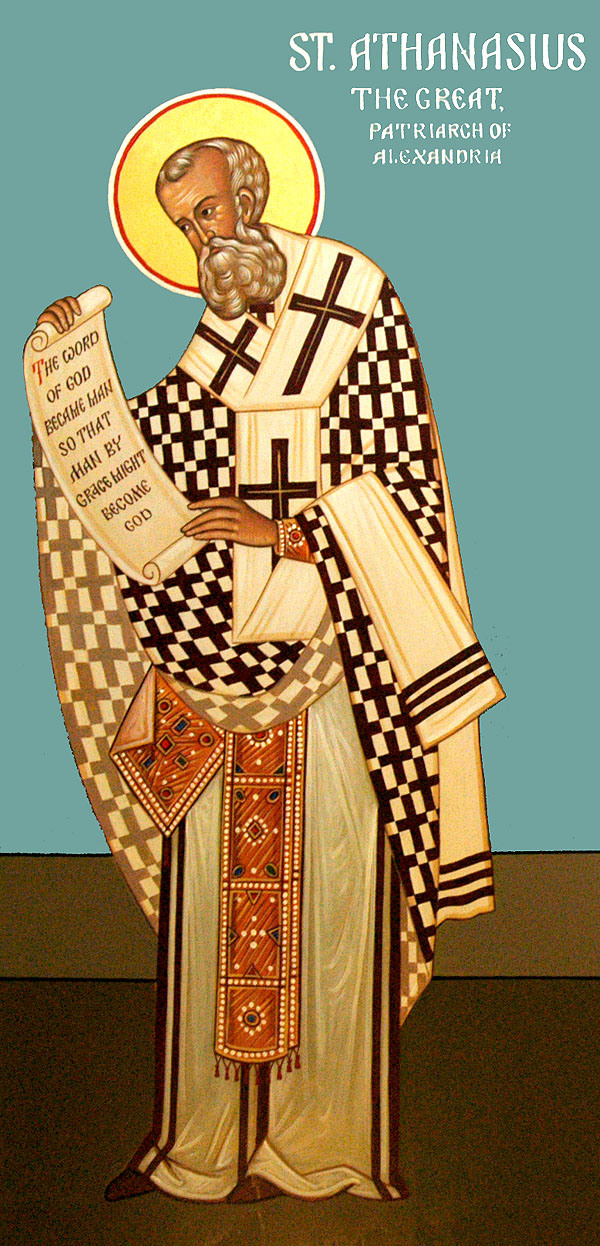
St. ATHANASIUS THE GREAT, in his famous life of St. Antony, describes the following:
"At the approach of the ninth hour, after beginning to pray before eating food, Antony was suddenly seized by the Spirit and raised up by angels into the heights. The aerial demons opposed his progress: the angels disputing with them, demanded that the reason of their opposition be set forth, because Antony had no sins at all. The demons strove to set forth the sins committed by him from his very birth; but the angels closed the mouths of the slanderers, telling them that they should not count the sins from his birth which had already been blotted out by the grace of Christ; but let them present -- if they have any -- the sins he committed after he entered monasticism and dedicated himself to God. In their accusation the demons uttered many brazen lies; but since their slanders were wanting in proof, a free path opened for Antony. Immediately he came to himself and saw that he was standing in the same place where he had stood for prayer. Forgetting about food, he spent the night in prayer with tears and groanings, reflecting on the multitude of man's enemies, on the battle against such an army, on the difficultly of the path to heaven through the air, and on the words of the Apostle who said: 'Our wrestling is not against flesh and blood, but against the principalities and powers of the air' (Eph 6:12; Eph 2:2).St. John Chrysostom, describing the hour of death, teaches:
The Apostle, knowing that the aerial powers are seeking only one thing, are concerned over it with all fervor, exert themselves and strive to deprive us of a free passage to heaven, exhorts: 'Take up the whole armor of God, that ye may be able to withstand in the evil day (Eph 6:13), that the adversary may be put to shame, having no evil thing to say of us (Tit 2:8)."
"Then we will need many prayers, many helpers, many good deeds, a great intercession from angels on the journey through the spaces of the air. If when traveling in a foreign land or a strange city we are in need of a guide, how much more necessary for us are guides and helpers to guide us past the invisible dignities and powers and world-rulers of this air, who are called persecutors and publicans and tax-collectors."St. Isaiah The Recluse (6th century) teaches that Christians should
"daily have death before our eyes and take care how to accomplish the departure from the body and how to pass by the powers of darkness who are to meet us in the air."St. Hesychius, Presbyter of Jerusalem (5th century) teaches:
"The hour of death will find us, it will come, and it will be impossible to escape it. Oh, if only the prince of the world and the air who is then to meet us might find our iniquities as nothing and insignificant and might not be able to accuse us justly."St. EPHRAIM THE SYRIAN (4th century) thus describes the hour of death and the hour of judgment at the toll-houses:
"When the fearful hour comes, when the divine takers-away command the soul to be translated from the body, when they draw us away by force and lead us away to the unavoidable judgment place -- then, seeing them, the poor man comes all into a shaking as if from an earthquake, is all in trembling. The divine takers-away, taking the soul, ascend in the air where stand the chiefs, the authorities and world-rulers of the opposing powers. These are our accusers, the fearful publicans, registrars, tax-collectors; they meet it on the way, register, examine and count all the sins and debts of this man -- the sins of youth and old age, voluntary and involuntary, committed in deed, word and thought. Great is the fear here, great the trembling of the poor soul, indescribable the want which it suffers then from the incalculable multitudes of its enemies surrounding it there in myriads, slandering it so as not to allow it to ascend to heaven, to dwell in the light of the living, to enter the land of life. But the holy angels, taking the soul, lead it away."St Cyril of Alexandria explains this further:
"As the soul ascends, it finds tax officials guarding the ascent, holding and preventing the souls from ascending. Each one of these custom stations presents its own particular sins of the souls. But, by the same token, the good angels do not abandon the soul to these evil stations. At the time of its accounting the angels offer in turn the soul's good works.An early Church catchiest, referring to custom officials who collected taxes, relays to us the common Church teaching:
In fact, the holy angelic powers enumerate to the evil spirits the good acts of the soul that were done by word, deed, thought and imagination. If the soul is found to have lived piously and in a way pleasing to God, it is received by the holy angels and transferred to that ineffable joy of the blessed and eternal life.
But, if it is found to have lived carelessly and prodigally, it hears the most harsh word: 'Let the ungodly be taken away, that he not see the glory of the Lord' (Isa 26:10).
Then the holy angels with profound regret abandon the soul and it is received by those dark demons so that may fling it with much malevolence into the prisons of Hades."
"I know of other tax collectors who after our departure from this present life inspect us and hold us to see if we have something that belongs to them." The same catchiest goes on to say: "I wonder how much we must suffer at the hands of those evil angels, who inspect everything and who, when someone is found unrepentant, demand not only the payment of taxes simply, but also seize and hold us completely captive" (Origen).This view is upheld by our great Father, St. Basil. Speaking about the courageous athletes of the faith, he teaches that they too will be scrutinized by the "revenue officials," that is, by the evil spirits. The same Father also says that the evil spirits observe the departure of the soul with so much more vigilant attention than do enemies over a besieged city or thieves over a treasury house. St. John Chrysostom likewise calls demons "revenue officials" who threaten us and who are "overbearing powers with a fearful countenance that horrifies the soul that looks upon them."
In another place St. John says that these evil spirits are called "persecutors and revenue officials and collectors of taxes in the Sacred Scripture." According to St. John, even the souls of innocent infants must pass through these toll-houses, for the all-evil devil seeks to snatch their souls, too. However, the infants make the following confession (according to St. John): "We have passed by the evil spirits without suffering any harm. For the dark custom officials saw our spotless body and were put to shame; they saw the soul good and pure and were embarrassed; they say the tongue immaculate and pure and blameless and they were silenced; we passed by and humiliated them. This is why the holy angles of God who met and received us rejoiced, the righteous greeted us with joy and the saints with delight said, 'Welcome, the lambs of Christ!'"
Probably the clearest and most comprehensive account of the toll-houses is that given by an angel of the Lord to St. Macarius Of Egypt:
"From the earth to heaven there is a ladder and a each rung has a cohort of demons. These are called toll-houses and the evil spirits meet the soul and bring its handwritten accounts and show these to the angels, saying: on this day and such and such of the month this soul did that: either it stole or fornicated or committed adultery or engaged in sodomy or lied or encouraged someone to an evil deed. And everything else evil which it has done, they show to the angels. The angels then show whatever good the soul has done, charity or prayer or liturgies or fasting or anything else.Descriptions of the aerial toll-houses may also be found in the following Saints' lives:
And the angels and the demons reckon up, and if they find the good greater than the evil, the angels seize the soul and take it up the next rung, while the demons gnash their teeth like wild dogs and make haste the snatch that pitiable soul from the hands of the Angels. The soul, meanwhile, cowers and terror encompasses it, and it makes as if to hide in the bosom of the Angels and there is a great discussion and must turmoil until that soul is delivered from the hands of the demons.
And they come again to another rung and there find another toll-house, fiercer and more horrible. And in this too, there is much uproar and great and indescribable turbulence as to who shall take that wretched soul. And shouting out aloud, the demons examine the soul, causing terror and saying: 'Where are you going? Aren't you the one who fornicated and thoroughly polluted Holy Baptism? Aren't you the one who polluted the angelic habit? Get back. Get down. Get yourself to dark Hell. Get yourself to the outer fire. Get going to that worm that never sleeps.'
Then if it be that that soul is condemned, the demons bear it off to below the earth, to a dark and distressing spot. And woe to that soul in which that person was born. And who shall tell, holy Father, the straits in which the condemned souls will find themselves in that place!
But if the soul is found clean and sinless, it goes up the Heaven with such joy."
- St. EUSTRATIUS THE GREAT MARTYR (4th century)
- St. NIPHON OF CONSTANTIA in Cyprus (4th century)
- St. SYMEON THE FOOL FOR CHRIST (6th century)
- St. JOHN THE MERCIFUL (7th century)
- St SYMEON OF THE WONDROUS MOUNTAIN (7th century)
- St. MACARIUS THE GREAT (4th century)
- St. COLUMBA (6th century)
- St. ADAMNAN (8th century)
- St. BONIFACE (8th century)
- St. BASIL THE NEW (10th century)
- The Soldier TAXIOTES
- St. JOHN OF THE LADDER (6th century)
St. Seraphim Of Sarov relates:
"Two nuns passed on. Both had been abbesses. The Lord revealed to me that their souls were having difficulty getting through the aerial toll-houses. Three days and nights, I, a lowly sinner, prayed and begged the Mother Of God for their salvation. The goodness of the Lord, through the prayers of the Most Holy Mother Of God, finally had mercy upon them. They passed the aerial toll-houses and received forgiveness of sins."Likewise, St. Theophan The Recluse writes:
"No matter how absurd the idea of the toll-houses may seem to our 'wise men,' they will not escape passing through them. What do these toll-gatherers seek in those who pass through? They seek whether people might have some of their goods. What kind of goods?In another place, St. Theophan (continuing his letter to the brother of the woman who was about to die) writes:
Passions.
Therefore, in the person whose heart is pure and a stranger to passion, they cannot find anything to wrangle over; on the contrary, the opposing quality will strike them like arrows of lightning.
To this someone who has a little education expressed the following thought: The toll-houses are something frightful. But it is quite possible that the demons, instead of something frightful, might present something seductive. They might present something deceptive and seductive, according to the kinds of passions, to the soul as it passes through one after the other.
When, during the course of life, the passions have been banished from the heart and the virtues opposed to them have been planted, then no matter what seductive thing you might present, the soul, having no kind of sympathy for it, passes by it, turning away from it with disgust. But when the heart has not been cleansed, the soul will rush to whatever passion the heart has most sympathy for; and the demons will take it like a friend, and then they know where to put it.
Therefore, it is very doubtful that a soul, as long as there remain in it sympathies for the objects of any passion, will not be put to shame at the toll-houses. Being put to shame here means that the soul itself is thrown into hell."
"In the departed there soon begins the struggle of going through the toll-houses. Here she needs help! Stand then in thought, and you will hear her cry to you: Help! This is where you should direct all your attention and all your love for her. Immerse yourself in prayer for her in her new condition and her new, unexpected needs. Having begun thus, remain in unceasing crying out to God to help her, for the course of six weeks, and indeed for longer than that.Significantly, all of this testimony is confirmed by the liturgical prayers of the Church. St. Ignatius Brianchaninov cites over 20 examples of references to the Toll-houses in the Divine service books and this is not a complete list!
In the account of Theodora, the bag from which the angels took in order to be separated from the tax-collectors was the prayers of her elder. Your prayers will do the same; do not forget to do this. This is love!"
[5] According to the revelation of the angel to St. Macarius, the Church's special commemoration of the departed on the 9th day after death (apart from the general significance of the ranks of angels) occurs because up to then the soul is shown the beauties of Paradise, and only after this, for the remainder of the forty days, is sown the torments and horrors of hell, before being assigned on the fortieth day to the place where it will await the resurrection of the dead and the Last Judgment.
[6] The Church's teaching on the state of souls in heaven and hell before the Last Judgment is set forth in its clearest fashion by St. Mark Of Ephesus in his dialogue with the Roman Catholics over the Roman doctrine of Purgatory (which the Orthodox reject as false). It is an extensive collection of writings, and much of it is beyond the focus of this limited study. The following should suffice, however, to illustrate the Orthodoxy of St. John Maximovitch's words:
"Those reposed in faith are without doubt helped by the Liturgies and prayers and almsgiving performed for them, and that this custom has been in force from antiquity, there is the testimony of many and various utterances of the Teachers, both Latin and Greek, spoken and written at various times and in various places. But that souls are delivered thanks to a certain purgatorial suffering and temporal fire which possesses such (a purgatorial) power and has the character of a help -- this we do not find in either Scripture or in the prayers and hymns for the dead, or in the words of the Teachers.St. MARK further explains the state of the departed in this way:
But we have received that even the souls which are held in hell and are already given over to eternal torments, whether in actual fact and experience or in hopeless expectation of such, although not in the sense of completely loosing them from torment or giving hope for final deliverance.
And this is shown by the words of the great Macarius the Egyptian ascetic who, finding a skull in the desert, was instructed by it concerning this by the action of Divine Power.
And Basil The Great, in the prayers read at Pentecost, writes literally the following:
'Who also, on this all-perfect and saving feast, are graciously pleased to accept propitiatory prayers for those who are imprisoned in hell, granting us a great hope of improvement for those who are imprisoned from the defilements which have imprisoned them, and that Thou wilt send down Thy consolation' (Third Kneeling Prayer at Vespers).But if souls have departed this life in faith and love, while nevertheless carrying with themselves certain faults, whether small ones over which they have not repented at all, or great ones for which -- even though have repented over them -- they did not undertake to show fruits of repentance: such souls, we believe, must be cleansed from this kind of sins, but not by means of some purgatorial fire or a definitive punishment in some place (for this, as we have said, has not at all been handed down to us).
But some must be cleansed in the very departure from the body (as St. Gregory The Dialogist literally shows); while others must be cleansed after the departure from the body, before they come to worship God and are honored with the lot of the blessed, or -- if their sins were more serious and bind them for a longer duration -- they are kept in hell, but not in order to remain forever in fire and torment, but as it were in prison and confinement under guard.
All such ones, we affirm, are helped by the prayers and Liturgies performed for them, with the cooperation of the Divine Goodness and Love for mankind.
And so, we entreat God and believe to deliver the departed (from eternal torment), and not from any other torment or fire apart from those torments and that fire which have been proclaimed to be forever."
"We affirm that neither the righteous have as yet received the fullness of their lot and that blessed condition for which they have prepared themselves here through works, nor have sinners, after death, been led away into the eternal punishment in which they shall be tormented eternally. Rather, both the one and the other must necessarily take place after the Judgment of that last day and the resurrection of all.St. GREGORY THE GREAT, in answering the question, "Is there anything at all that can possibly benefit souls after death?" teaches:
Now, however, both the one and the other are in places proper to them: the first, in absolute repose and free, are in heaven with the angels and before God Himself, and already as if in Paradise from which Adam fell and often visit us in those temples where they are venerated, and hear those who call on them and pray for them to God, having received from Him this surpassing gift, and through their relics perform miracles and take delight in the vision of God and the illumination sent from Him more perfectly and purely than before, when they were alive;
while the second, in their turn, being confined to hell, remain in 'the lowest pit, in darkness and in the shadow of death' (Ps 87:7), as David says, and then Job: 'to the land where the light is darkness' (Job 10:21-22).
And the first remain in every joy and rejoicing, already expecting and only not having in their hands the Kingdom and the unutterable good things promised them;
and the second, on the contrary, remain in all confinement and inconsolable suffering, like condemned men awaiting the Judge's sentence and foreseeing the torments.
Neither have the first yet received the inheritance of the Kingdom and those good things 'which eye hath not seen, nor ear heard, nor have entered into the heart of man' (1 Cor 2:9); nor have the second part yet been given over to eternal torments nor to burning in the unquenchable fire. And this teaching we have as handed down from our Fathers in antiquity and we can easily present it from the Divine Scriptures themselves."
"The Holy Sacrifice of Christ, our saving Victim, brings great benefits to souls even after death, provided their sins (are such as) can be pardoned in the life to come. For this reason the souls of the dead sometimes beg to have Liturgies offered for them. The safer course, naturally, is to do for ourselves what we hope others will do for us after death. It is better to make one's exit a free man than to seek liberty after one is in chains. We should, therefore, despise the world with all our hearts as though its glory were already spent, and offer our sacrifice of tears to God each day as we immolate His sacred Flesh and Blood. This Sacrifice alone has the power of saving the soul from eternal death, for it presents to us mystically the death of the Only-begotten Son."Many incidents from the Lives of Orthodox saints and ascetics confirm this teaching.
[7] The Apostolic Constitutions (1st/2nd century) teach that Memorials for the dead be served with "psalms and readings and prayers" on the third day after the death of our beloved one, on account of the Lord Jesus "who rose after three days."
They prescribe Memorials on the ninth day "as a reminder of the living and the dead," as well as "on the fortieth day after death according to ancient practice."
This is how the people of Israel mourned for the great Moses. In addition to these we must have annual Memorials in remembrance of the deceased. This teaching is also given by St. Isidoros Of Pelusium, St. Symeon The New Theolgian and St. Gregory The Theologian.
In addition to these Memorials, our holy Church has ordained that the Sabbath (Saturday) be a day of commemoration of the Holy Martyrs and of all the deceased. For the Sabbath, as the seventh day from the beginning of creation, is the day which saw bodily death, imposed upon man by the righteous God. This day is continued, in as much as the death of man is also continued at the same time, Sunday, however, is the "day of the Resurrection, the eighth day, which symbolizes the anticipated age of eternity, the resurrection of the dead and the endless kingdom of God."
Our Mother Church has also ordained common Memorials twice a year: on the Saturday before Meatfare Sunday and on the Saturday before the great feast of Holy Pentecost.
St. John Of Damascus adds: "the Apostles who speak for God and the spirit-bearing Fathers have decreed this with inspiration and in a manner pleasing to God."
Source:
http://www.orthodox.net/articles/life-after-death-john-maximovitch.html